
The finance minister continues to be backed by the same policy team in charting out the broad strategy as in the few earlier Budgets.

To boost domestic manufacturing under the Make in India initiative and reduce dependency on imports, the government is expected to announce in the Budget an increase in the minimum local content requirement for public procurement, with certain sectors being granted exceptions. Currently, firms producing goods, services, or works with at least 50 per cent local content are classified as Class-I local suppliers and are preferred the most in government procurement.

'There is no immediate threat to the government, and they would prefer the growth agenda.'

A lot of the 100-day programmes would be 'milestone-based' with timelines for achieving targets for social-sector schemes.

'The nominal GDP growth assumption for FY25 may be revised upwards on higher growth expectations.'
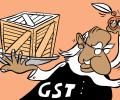
In a relief for foreign firms giving loans to Indian subsidiaries, tax authorities have said goods and services tax (GST) will not be imposed on them, subject to some caveats. Additional fees, commissions, or related payments - over and above the amount charged as interest - on these loans will attract GST at 18 per cent, the Central Board of Indirect Taxes and Customs (CBIC) has said.

Amid the Budget preparation, the revenue department is assessing the feasibility of further adjustments to maximise benefits for salaried individuals.

'Any finality in such matters requires political views. We will review it closer to the full Budget.'
The Goods and Services Tax (GST) Council, scheduled to meet on June 22, could take a call on ending uncertainty on taxing foreign airlines and shippers as regards certain services, a senior official in the know told Business Standard. He said the Council was expected to decide on exempting the services in question from GST - aircraft lease rentals, maintenance, crew salaries, etc. These services are provided by foreign airlines to their Indian operations.

Fresh plans of privatisation or divestment in central public sector enterprises and public sector banks might take a back seat this financial year because these may require a large consensus among coalition partners.

'The expeditious enactment of labour codes and strategic measures to bridge the skills jobs gap are critical.'

The Central Board of Indirect Taxes and Customs (CBIC) has stepped up its watch on the import of unbranded gold jewellery amid a spurt in seizures on international borders and from importers. During FY24, the CBIC and Directorate of Revenue Intelligence (DRI) jointly seized about 5 tonnes of gold, 30 per cent more than what they did in FY23. In FY23, 3.5 tonnes of gold was confiscated.

India's current account deficit (CAD) may dip further in the March quarter of FY24 as pressure from the negative net exports during the January-March period eased to an 11-quarter high. A part of the gross domestic product (GDP) data, net export- which is usually negative for India - captures the difference between exports and imports of both goods and services, while the CAD data, released by the Reserve Bank of India (RBI), also factors in private transfer receipts.

The fitment committee under the Goods and Services Tax (GST) Council, comprising central and state officials, has begun a rate rationalisation exercise afresh, checking the possibility of dropping some of the rates, particularly the 12 per cent slab, to achieve a revenue-neutral structure, a senior official with direct knowledge of the matter

Smartphones have been a key success story of the government's production-linked incentive scheme, helping India become the second-largest mobile phone manufacturing country, after China.

The government is planning to tweak its procurement policy to give a fillip to domestic manufacturing. The industry department has floated a proposal to raise the minimum local content requirement for public procurement for Class-I and -II suppliers from 50 per cent currently to 70 per cent, and 20 per cent as of now to 50 per cent, respectively.

From toys, footwear and furniture to insulated flasks, smart meters, and air coolers - the Central government over the last decade has mandated higher standards for production and imports of such items. Sample this: Till 2014, there were 14 Quality Control Orders (QCOs) covering 106 products. By the latest count, there are 156 QCOs on 672 products.

The Paytm application (app) could potentially face a permanent loss of its integrated mobile wallet feature, currently owned by Paytm Payments Bank (Paytm PB). With the recent crackdown on Paytm PB, sources say getting a fresh wallet licence may get tough for the group. "The Paytm app (One97 Communications) has to apply afresh to the RBI for a licence to operate a prepaid payment instrument (PPI) like a mobile wallet within the Paytm app, as PPI is a regulated entity.

'The revenue projection arises out of all sectors doing well and the formalisation of the economy helps in making sure the tax domain gets widened.'

'We now look at divestment as an opportunity for maximising the value of public assets, not necessarily as a short-term resource-raising measure.'
 © 2026 Rediff.com - Investor Information - Advertise with us - Disclaimer - Privacy Policy - Sitemap - Feedback - About us - Terms of use - Grievances